Archive for the ‘Uncategorized’ Category

Burnt Sugar (in Detroit)

November 10, 2010

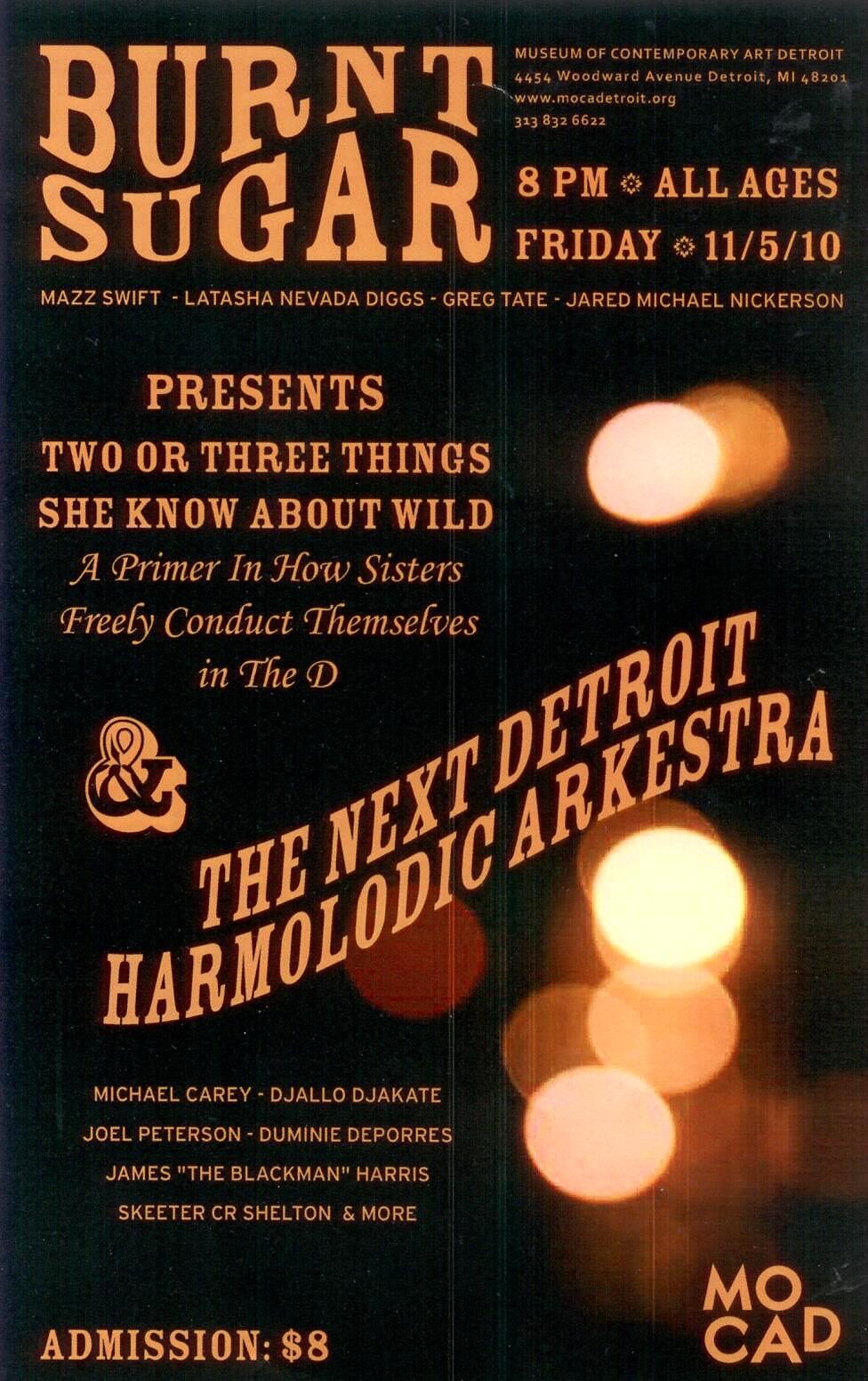
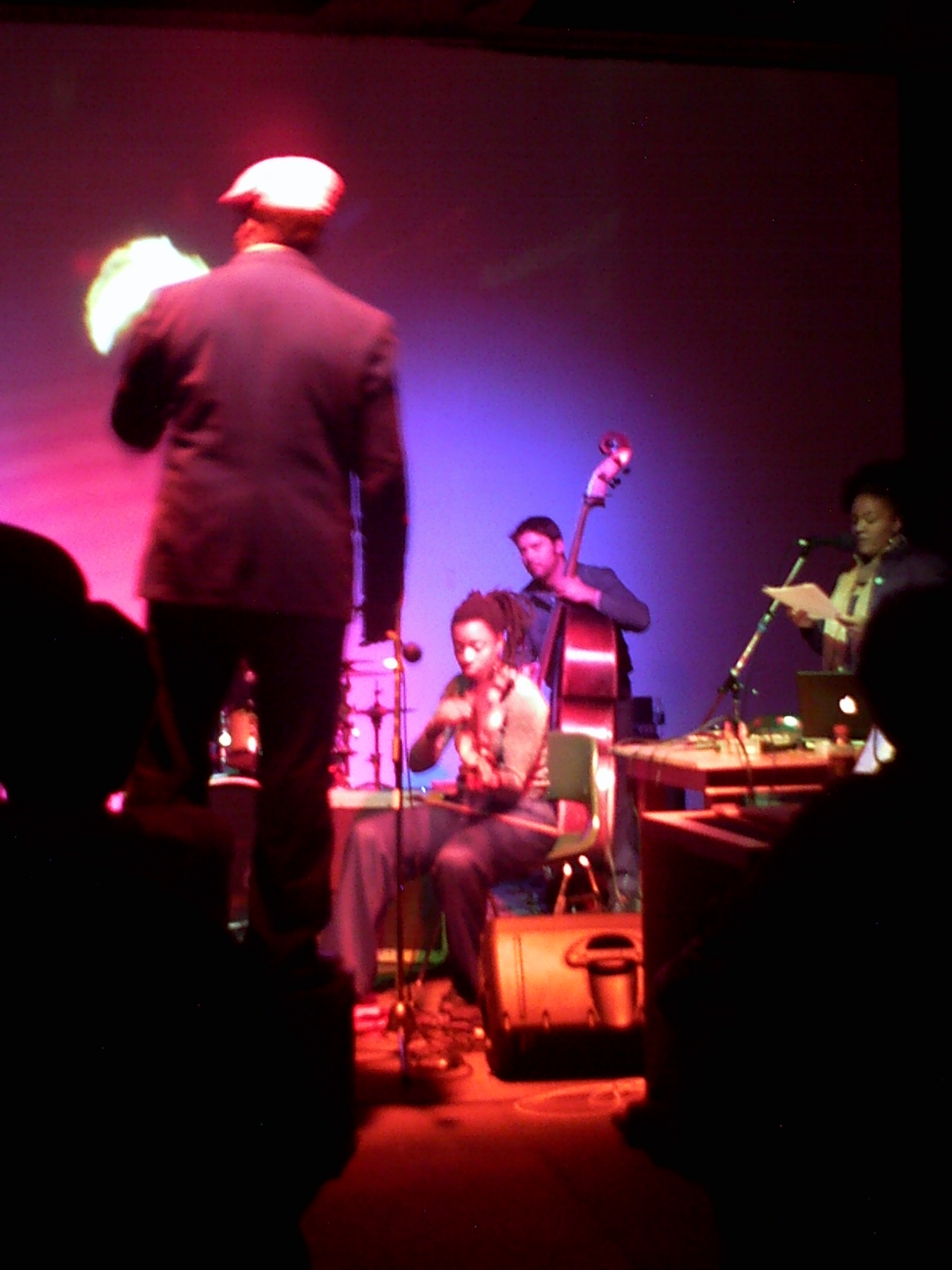
at MOCAD November 5, 2010

I’ve always been curious about the musical group Burnt Sugar.  I’d heard good things about them, but very little of their music.  I caught them here, last week and got some of their recordings.  Both were quite good and most enjoyable.

I’ve been reading Philip Freeman’s 2005 book Running the Voodoo Down The Electric Music of Miles Davis.  It’s a nice overview of Miles’ music from 1968 to 1991.  It includes a section on Burnt Sugar and their “expansive vision.”  Freeman notes that “Their music absorbs funk, reggae, electronica, jazz, rock, soul, hip-hop, heavy metal, and twentieth-century classical, and combines it all into a heady, psychedelic sonic trance, built on a foundation of thick, muddy basslines, that feels like it could go on forever.”  It also quoted writer/bandleader Greg Tate on Miles, Jimi Hendrix and more.  I remember reading a lot of Tate’s old writings in the Village Voice too. 

I have two Burnt Sugar/The Arkestra Chamber records.  One from 2001 (the first I think) and one from 2004.

This performance, entitled TWO OR THREE THINGS SHE KNOW ABOUT WILD:  A Primer In How Sisters Freely Conduct Themselves in The D, included a contingent of Detroiters.

The band included Mazz Swift  on violin and vocals , Latasha N. Nevada Diggs on effected vocals & Soundscapes,  Greg Tate on laptop, guitars and baton, Jared Michael Nickerson on bass and The Next Detroit Harmolodic Arkestra (Joel Peterson on upright bass, Duminie Deporres, James “the Blackman” Harris, Skeeter CR Shelton, Michael Carey and others).

The Detroiters  “sat in” with the regular Burnt Sugar group.  They did a special piece organized for this performance.  It was quite good, I thought, well performed, funky and fun.  I’d seen them rehearsing the night before.  I just spied it from the sidewalk for a minute.

They have some things in common with one of my own musical projects, Detroit’s Spaceband.  These include use of projections (“light shows”), spoken word/poetry, unusual instruments and unusual combinations of instruments.  Greg Tate conducted most of it, standing on top of a box.

There was a good vibe to the whole evening.  Most of the local musicians, I’d seen many times, in a variety of contexts.   The regular Burnt Sugar, New York band that I spoke with were friendly.  It was out there!

http://burntsugarindex.com/

Information on the MOCAD performance:

http://www.mocadetroit.org/pastevents-2010.html

Some video interviews from All About Jazz:

http://www.allaboutjazz.com/php/news.php?id=32252

Anita O’Day 1919-2006

October 30, 2010

at the Newport Jazz Festival in 1958

I’ve always liked Anita O’Day’s singing. It’s just recently though that I’ve been really listening to her work more closely.

In her early days, as a teenager, she do the dancing/walking marathons. This was mostly around Chicago. Lord Buckley was one of the MCs and they were friends. He encouraged her. In her book she says “…Dick Buckley was very rhythmical and he took a special interest in my singing.”

Later, in 1954, she got to hang out with Charlie Parker in Detroit. She was at the Flame show Bar and Bird was playing at the Crystal Lounge. She says that they hoped to do an album together and that Parker told her “you come from the same branch of the tree as I do when it comes to time.” Eight months later he was dead.

O’Day did have a wild sense of time, she could really sing. she attributed part of her sound to losing her uvula in a tonsillectomy when she was a child.  She developed her own style, leaning into the song and swinging.  She wasn’t as concerned with “selling the melody.”  She’d usually sing most of the words but sometimes she’d be singing them very fast

She loved Louis Armstrong and Billie Holiday’s singing as well.  They both really influenced her.  She performed with the Gene Krupa band.  She had some famous duet numbers with trumpeter Roy Eldridge.

She had some wild times too, as detailed in her book 1981 High Times, Hard Times and the documentary film Anita O’Day The Life of a Jazz Singer. The film includes candid interviews with her discussing her career and life.  It also has a lot of clips of her singing,  There are also a lot more clips of her performing on the bonus disc of the DVD.

Eventually, she “cleaned up” and got off the drugs and alcohol.  Despite health problems, she got it together and was still singing and performing at the end of her life.  I’m looking forward to exploring her work.

Interview:

http://www.npr.org/programs/jazzprofiles/archive/o’day_a.html

The film:

http://rogerebert.suntimes.com/apps/pbcs.dll/article?AID=/20081008/REVIEWS/810089993

http://www.independent.co.uk/news/obituaries/anita-oday-425721.html

http://jazztimes.com/articles/25117-the-life-of-a-jazz-singer-anita-o-day

Detroit Jazz Festival 2010

September 25, 2010


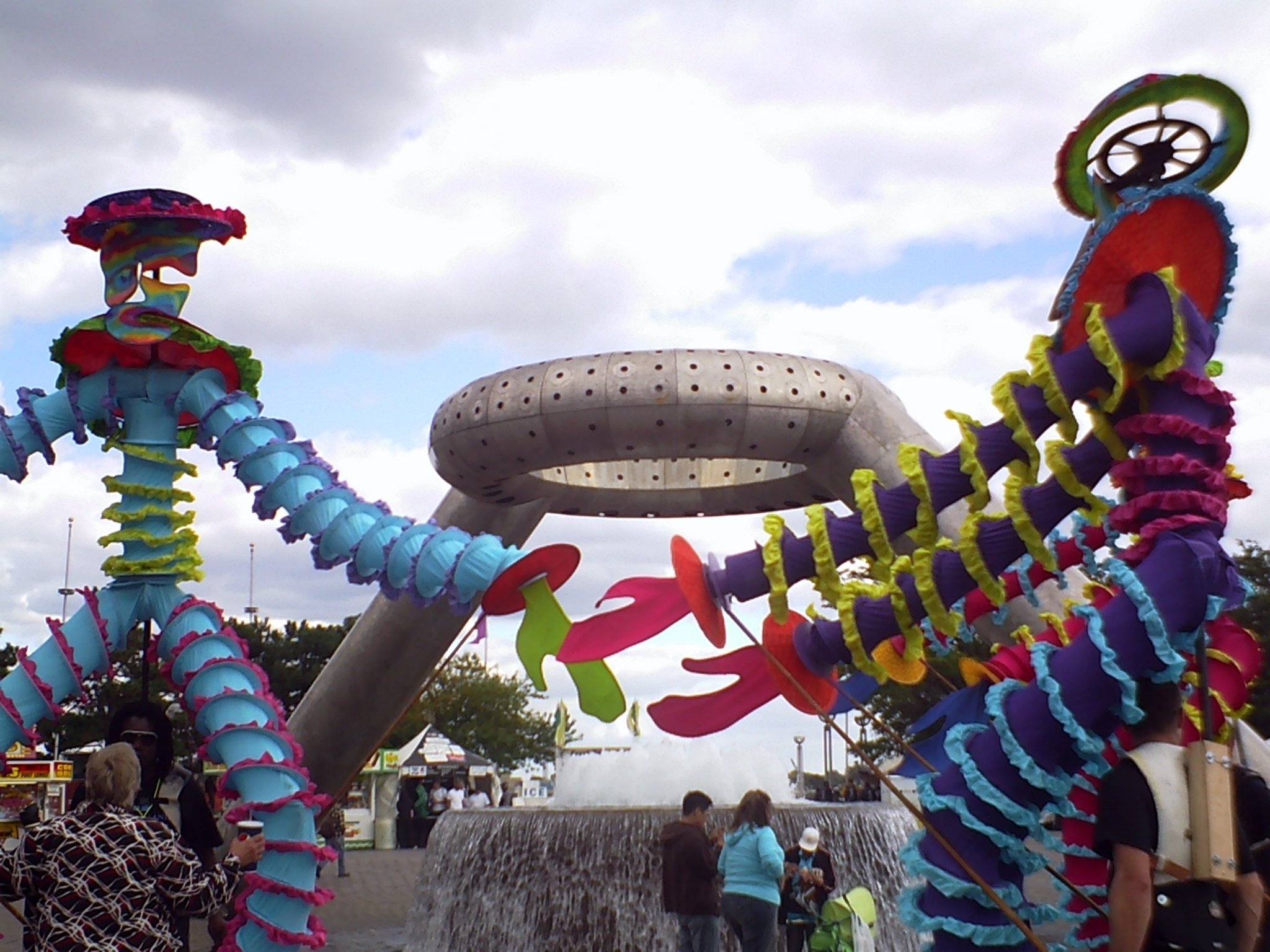
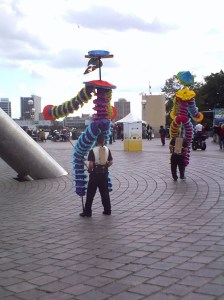
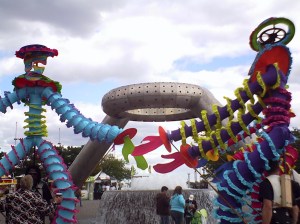
These giant “Gaudi puppets” are from the Cleveland Museum of Art.   
   

I really loved the Detroit Jazz Festival this year.  I missed Friday night.  Instead, I went by my art exhibit.  Then I saw Salim Washington sit in with the Planet D Nonet on the east side.   

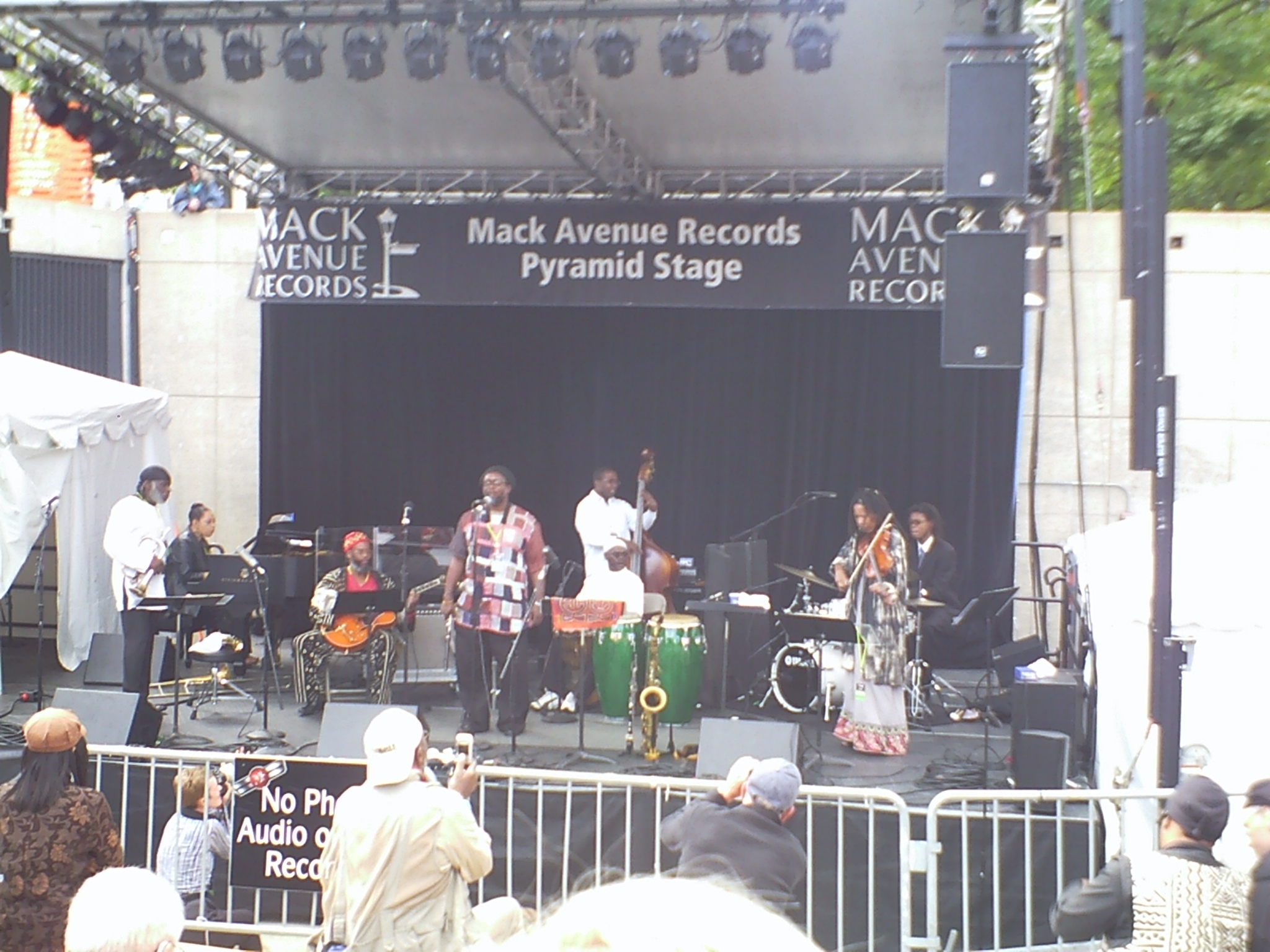
Saturday, I caught part of the Brad Felt Nu Quartet Plus (very good).  Then, also on the Pyramid stage, was Salim Washington and the Harlem Arts Ensemble.  It included special guests such as Detroiter Akunda Hollis on congas (I remember his work going back to the late 1970’s).  That was an excellent set, I thought.  I loved it.  This grouping was an octet including guitar, violin and rhythm section.  Washington played various instruments and  Kuumba Frank Lacy played trombone and more.   
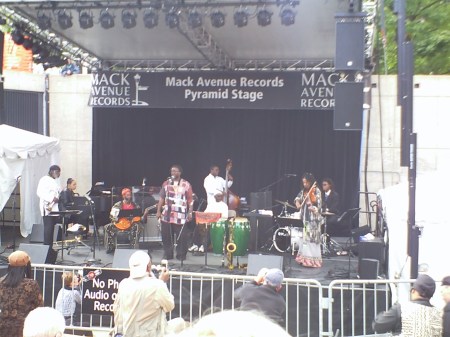
Salim Washington & The Harlem Arts Ensemble

Then, over at the Waterfront stage I caught most of “Hot Pepper”, a tribute to baritone sax player Pepper Adams with Barry Harris and Gary Smulyan.  I’ve often caught Harris’ annual year-end holiday shows.  It’s always a joy to catch a set from one of original bebop pianists.    

It turned out to be a pretty cool to cold evening.  I caught some of Terrence Blanchard’s set.  Then, it was back to the Waterfront stage for Mulgrew Miller & Wingspan.  Both sets were enjoyable.   

I took off and as I left, I saw they’d started a fireworks display.  After I got off my bus, at the Art Institute, I could still see the fireworks downtown.   
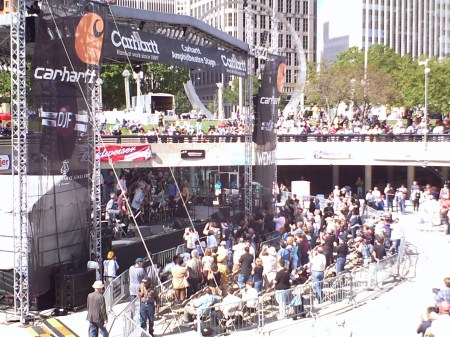
The end of the set for the Maria Schneider Orchestra

Sunday, I got down there just in time for the Maria Schneider Orchestra.  I really  loved that too.  There were some scorching solos and some sweet ones. Maria Schneider’s the composer, arranger and conductor.   She worked with Gil Evans and her work has an impressionistic quality.  

I caught parts of other acts including piano duets from Kenny Barron and Mulgrew Miller.  Soon though, it was back to the Pyramid stage for one of the most experimental groups of the festival.  Trio M is an improvisational “leaderless trio” in ways. It features Myra Melford on piano, Mark Dresser on bass and Matt Wilson on drums.  Melford is especially impressive.  She plays the piano percussively, even using her fists at times. 

I caught some of the “jazz talk” programs over the weekend.  I didn’t get to as much of that as I’d hoped but what I caught was well worthwhile.

For the rest of the evening, I went around sampling various bands.  I’d usually just stay for a few numbers.  My friend James O’Donnell (on trumpet) was part of the group LL7.  Bassist Robert Hurst’s quartet included  Mulgrew Miller on piano, Bennie Maupin on woodwinds and  Karriem Riggins on drums.   

I really enjoyed the tribute to Ray Brown too.  This included bassist Christian McBride, pianist Benny Green and again, Riggins on drums.  They did some of Brown’s arrangements and compositions. 
Tribute to Ray Brown

There’s always been a problem with the loud music on one stage overwhelming the quiet music on another stage.  The late pianist Tommy Flanagan’s final festival performance was a noteworthy example of this.  It must have been in 2000 or 2001.  His quieter ballads were completely drowned out by electric guitars and other loud sounds from the biggest stage. 

The Tierney Sutton Band made use of this.  Singer Sutton and her pianist  Christian Jacob actually tried to respond to and improvise with some of the music from the other stage!   I just happened to catch  this.  The night was like that, wandering and digging “the feast.” 

For the finale, I crossed Jefferson and caught the last part of the Mambo Legends Orchestra.  They were also swinging and were a lot of fun.  There were people dancing.  The audience was really into it. 
The Mambo Legends Orchestra

Monday, Labor Day, I got down in time for about half of drummer Roy Haynes set (shame on me for being late.  I blame the busses).  He sounded great and looked great  He’s a real living legend. 

The weather was cooler again and a bit rainy.  I caught parts of sets by Kurt Elling and Branford Marsalis.  Then, one of the highlights, New Orleans’ Allen Toussaint.  He played and sang a lot of his old hit songs like Lipstick Traces, A Certain Girl, Working in the Coal Mine and many more.  I loved his recent, jazzier record Bright Mississippi.  He did Singin’ the Blues from that.  It was just him and a piano, a great end to the festival. 
Branford Marsalis and band

http://www.detroitjazzfest.com/index.html   

Last year’s festival: 

https://earfood99.wordpress.com/2009/09/12/detroit-jazz-fest-september-2009/ 

Metro Times Blog:

http://blogs.metrotimes.com/index.php/2010/09/jazz-fest-highlights/

http://blogs.metrotimes.com/index.php/2010/09/day-3-of-detroit-jazz-fest/

http://blogs.metrotimes.com/index.php/2010/09/a-look-back-a-the-31st-detroit-jazz-fest/

(this is one post of several)

Salim Washington: 

http://www.salimwashington.com/ 

I’ve been reading this book he co-wrote: 

http://us.macmillan.com/clawingatthelimitsofcool 

http://www.popmatters.com/pm/review/clawing-at-the-limits-of-cool-by-griffin-washington 

Barry Harris: 

http://www.barryharris.com/profile.htm 

Maria Schneider:   

http://www.mariaschneider.com/ 

A review of an earlier Trio M performance: 

http://www.nytimes.com/2008/02/02/arts/music/02kita.html 

Myra Melford: 

http://www.cryptogramophone.com/index.php?module=Crypto&func=artist&id=85

Mark Dresser:

http://www.cryptogramophone.com/index.php?module=Crypto&func=artist&id=8

Roy Haynes: 

http://www.jazzwax.com/2008/07/interview-roy-h.html 

Allen Toussaint: 

http://www.allentoussaint.com/
The Mighty Sparrow

July 29, 2010

I’m a big fan of the Mighty Sparrow.  He’s often very sharp politically and socially.  He often very funny too.  Sometimes he’s outrageously funny.  You can’t quite believe what he’s singing.

Other times, songs don’t work as well.  He can be too serious or too frivolous.  Yet even here, there are dumb throw aways and great throw aways.  I have to admit that I’ve only scratched the surface of his lifetime output.

He is also called Slinger Francisco.   I once saw him perform at a free Summer concert in New York City.  It was a memorable show.

I know his earlier, classic work better than his newer stuff.  That 4 CD Ice Records set is wonderful (I’ve got 3 out of 4) plus I’ve got a few LPs on vinyl.  Long live the Mighty Sparrow!

http://www.mightysparrow.com/

Bio:

http://www.mightysparrow.com/biopage.htm

lyrics to 1964’s Martin Luther King For President:

http://sniff.numachi.com/pages/tiMLKING1.html

Barack the Magnificent:

http://kid5rivers.blogspot.com/2008/02/barack-magnificent-lyrics.html

The Ice Records Series:

http://www.cduniverse.com/search/xx/music/pid/2916489/a/Volume+Four.htm

http://www.robertchristgau.com/get_artist.php?id=941&name=Mighty+Sparrow

http://en.wikipedia.org/wiki/Ice_Records

Recent health problems and death rumors:

http://www.trinidadandtobagonews.com/blog/?p=4078

One of his songs deals hilariously with death rumors!

Rahsaan Roland Kirk

May 19, 2010

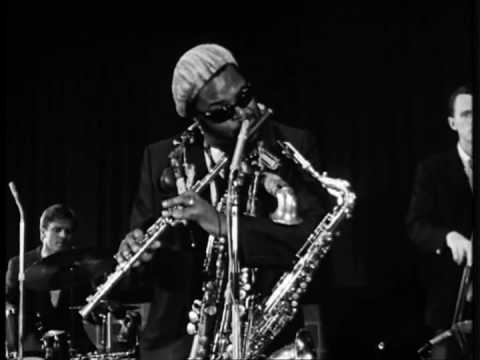
Rahsaan Roland Kirk was a master musician.  He was also magical and unafraid of humor.  He played a wide variety of instruments, often several at a time.  Yet he didn’t like being labeled as a “gimmick performer.”  He was a musician through and through.

I just finished an extensive study of the man.  This included playing his recordings (mostly on vinyl) and reading the liner notes.

He was born August 7, 1936.  He probably wasn’t born blind.  There’s a story he lost his eyesight at the age of two, due to a mistake by a nurse.  He started playing music as a child and kept at it.

His career included a stint with Charles Mingus and many dates as a leader.  He was a good composer.  His music included such titles as Bright Moments, The Inflated Tear, Volunteered Slavery and Portrait of  Those Beautiful Ladies.  His instruments included flute, harmonica, stritch, manzello (which he called a Moon Zellar), alto sax, melodica, piano, lyricon, sirens, whistles, nose flutes, bells and many others.  His primary ax was the tenor sax.

I also enjoyed the impressionistic biography by John Kruth: BRIGHT MOMENTS The Life and Legacy of Rahsaan Roland Kirk.  It was published ten years ago, in 2000.  There were a lot of good stories, quotations and appreciations contained therein.

I also recently saw some live performances on video.  In one from Milan, Italy in November 1962 you can see him interact with pianist Tete Monontoliu (who was also blind).  They had a pre-arranged maneuver that when Kirk wanted Montiliu to stop playing, he walked over to him and took his hands off the keyboard.  At one point, you can see drummer Kenny Clarke “lay out” and just watch the one-man horn section in amazement.

On the same DVD, there was another performance from Prague in the Czech Republic in October, 1967.  Here, you get to see Mr. Kirk play the nose flute!  He was really something!  I wish I’d got to see him live.

I likely would have if he hadn’t died at age 42.  He’d recovered from a stroke and managed to keep playing for a few years.  His intensity and technical vibrancy were somewhat diminished.  Yet his inventiveness and his soul kept going.  A second stroke took him, too soon, all too soon.

Update, 2016:

I just saw the solid new documentary about Rahsaan,  The Case of the Three-Sided Dream. Track it down now or wait for the DVD. It’s still playing in theatres, here and there.

http://en.wikipedia.org/wiki/Rahsaan_Roland_Kirk

http://www.musicfilmweb.com/2014/03/rahsaan-roland-kirk-adam-kahan-jazz-music-documentary/

http://larecord.com/interviews/2014/07/18/the-case-of-the-three-sided-dream-rahsaan-roland-kirk-documentary-interview

http://www.jerryjazzmusician.com/2004/04/great-encounters-4-when-rahsaan-roland-kirk-appeared-on-ed-sullivans-last-show-in-1971/

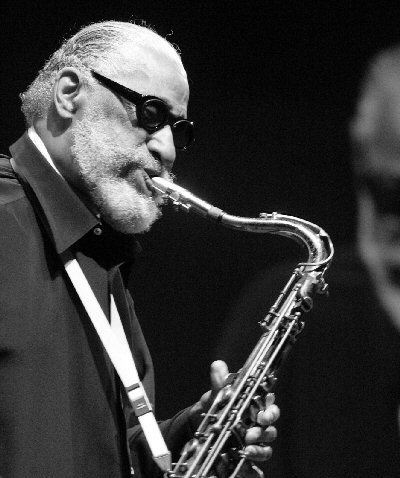
Sonny Rollins

April 22, 2010

I’ve seen Sonny Rollins perform three times in the past five years.  First, at Lincoln Center Outdoors in August 2006.  This was a free show playing to a huge crowd and was just great.  I’ve included a review in the web links below.

Then, in October 2007, he played Detroit’s Music Hall.  Again, he was in fine form and put on a memorable show.

Earlier this month, he played here again at the Orchestra Hall.  It’s a beautiful space with fine acoustics.  Now, it’s used mostly for the symphony orchestra.

Back in the 1940’s it was the Paradise Theatre and there were many great jazz concerts there.  Sonny Rollins commented on this during the show.  Being there again brought back memories.  I think that being back at the “Paradise” helped inspire him.

The band included mainstay Bob Cranshaw on bass, Bobby Broom on guitar, Kobie Watkins on drums and Victor See-Yuen on percussion.  Mr. Cranshaw’s been playing with Sonny Rollins since at least 1962!

This was the first show of a world tour that has him booked through November.  He played two sets.  His energy was phenomenal.  He didn’t seem to “lay out” much.

Sometimes his concerts get mixed reviews.  I just saw a bad review for his show last Sunday in Boston.  Yet I’m convinced that I saw three good ones.

Even on something of an “off night” he’s well worth seeing.

http://www.sonnyrollins.com/

http://www.nytimes.com/2006/10/21/arts/music/21sonn.html

http://www.nytimes.com/2009/11/29/nyregion/29musicwe.html

Paradise Theatre Information:

http://cinematreasures.org/theater/2589/

The show I saw in New York:

http://www.nytimes.com/2006/08/29/arts/music/29roll.html

P.S.  His recorded output is mammoth.   I especially like the past few records (including a studio recording Sonny Please, a live recording and a compilation of live performances).  His early Prestige stuff is wonderful.  Silver City and his Ken Burns Jazz CD are both top-notch compilations.

the hearing eye/thriving on a riff

March 5, 2010

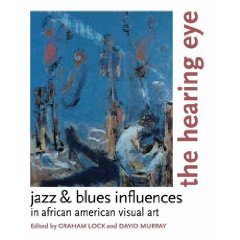
The recent book the hearing eye details “jazz and blues influences in african american Visual Art.”  Essays include Robert Farris Thompson on Jean-Michel Basquiat and Paul Oliver on early blues advertising art.  Artists covered include Bob Thompson, Romare Beardon, photographer Roy DeCarava, Joe Overstreet (whose art graces both of the covers),  Norman Lewis, Sam Middleton, Rose Piper and others.

It opens with a quote from Charlie Parker “Hear with your eyes and see with your ears.”  He was quoted by Art Blakey here.  I found a similar quote, attributed to musicians from India.

The companion volume, thriving on a riff, details “jazz and blues influences in african american literature and film.”  In the introduction it speaks of Sun Ra’s use of the word “jazzisticology” aka the study of jazzistics.

Points of interest include an interview with the great poet-performer Jayne Cortez.  There’s also an exploration of jazz autobiography and its ghost writers.  It focuses on the Miles Davis autobiography, but touches upon most of the others.  There’s a piece on problems with Charlie Parker biographer Ross Russell. 

Film soundtracks are examined.  Two of those focused on are John Lewis’ work for Odds Against Tomorrow and the Ellington/Strayhorn score for Anatomy of a Murder.

Both books are from 2009 and edited by Graham Lock and David Murray.  It’s not David Murray the musician.  I’ve read Lock’s book Blutopia.

reviews:

http://www.allaboutjazz.com/php/article.php?id=32727&recommended=1 

http://jazztimes.com/articles/25214-thriving-on-a-riff-jazz-and-blues-influences-in-african-american-literature-and-film-graham-lock-and-david-murray

These are good sites on the books from Oxford University Press, but you need to put in passwords to really get to everything.

the hearing eye site:

http://www.oup.com/us/companion.websites/9780195340518/about_book/?view=usa

thriving on a riff site:

http://www.oup.com/us/companion.websites/9780195337099/about_book/?view=usa

A few of the artists and writers featured in these books

Jayne Cortez:

http://www.jaynecortez08.com/

Joe Overstreet:

http://www.joeoverstreet.com/

Sam Middleton:

http://middletonsam.blogspot.com/

Paul Oliver:

http://en.wikipedia.org/wiki/Paul_Oliver

Blutopia book:

http://www.jazzscript.co.uk/books/blutopialock.htm

Keep Those Ears Busy!

January 16, 2010

Hello and best for 2010.

I finished a big study of Miles Davis, listening to most of his work in chronological order.  I also played my vinyl collection of Charlie Parker’s Royal Roost recordings (narrated by the one and only Symphony Sid.  You get to hear Bird’s speaking voice a bit too, and he sings on Salt Peanuts).

Other close musical studies (on-going) involve Harry Partch, Thelonious Monk and Rahsaan Roland Kirk.

Then there’s a lot of music from Africa (especially Franco and Oumou Sangare) and from Morocco.  Other recent favorites include Art Pepper, Mildred Bailey, Willie Nelson, Randy Weston, Charlie Patton, Harry Nilsson, the Mighty Sparrow and the late Vic Chesnutt.

I wouldn’t presume to list everything I hear, but I love my music and I’m often listening!

Jazz Photography

December 22, 2009
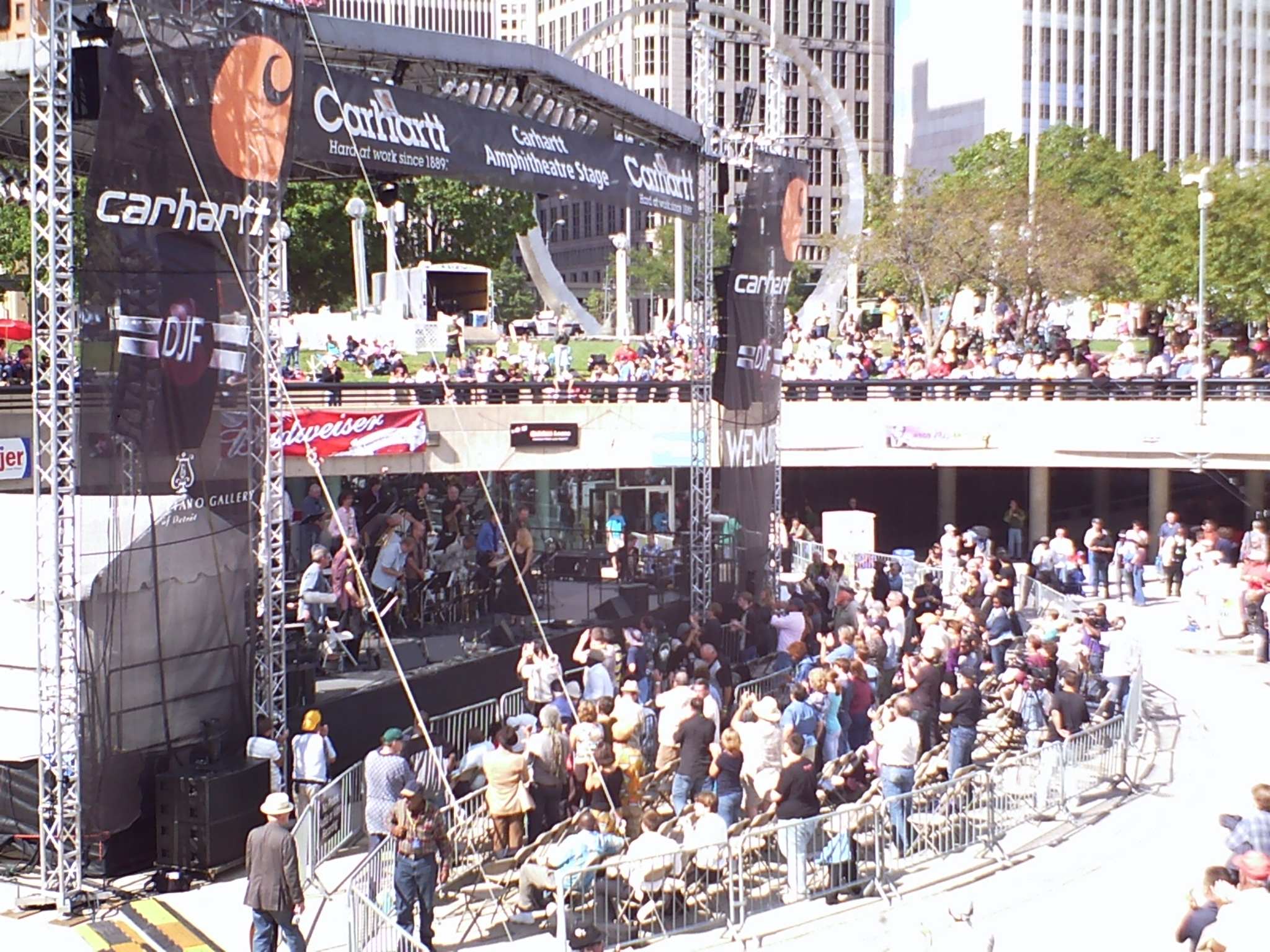
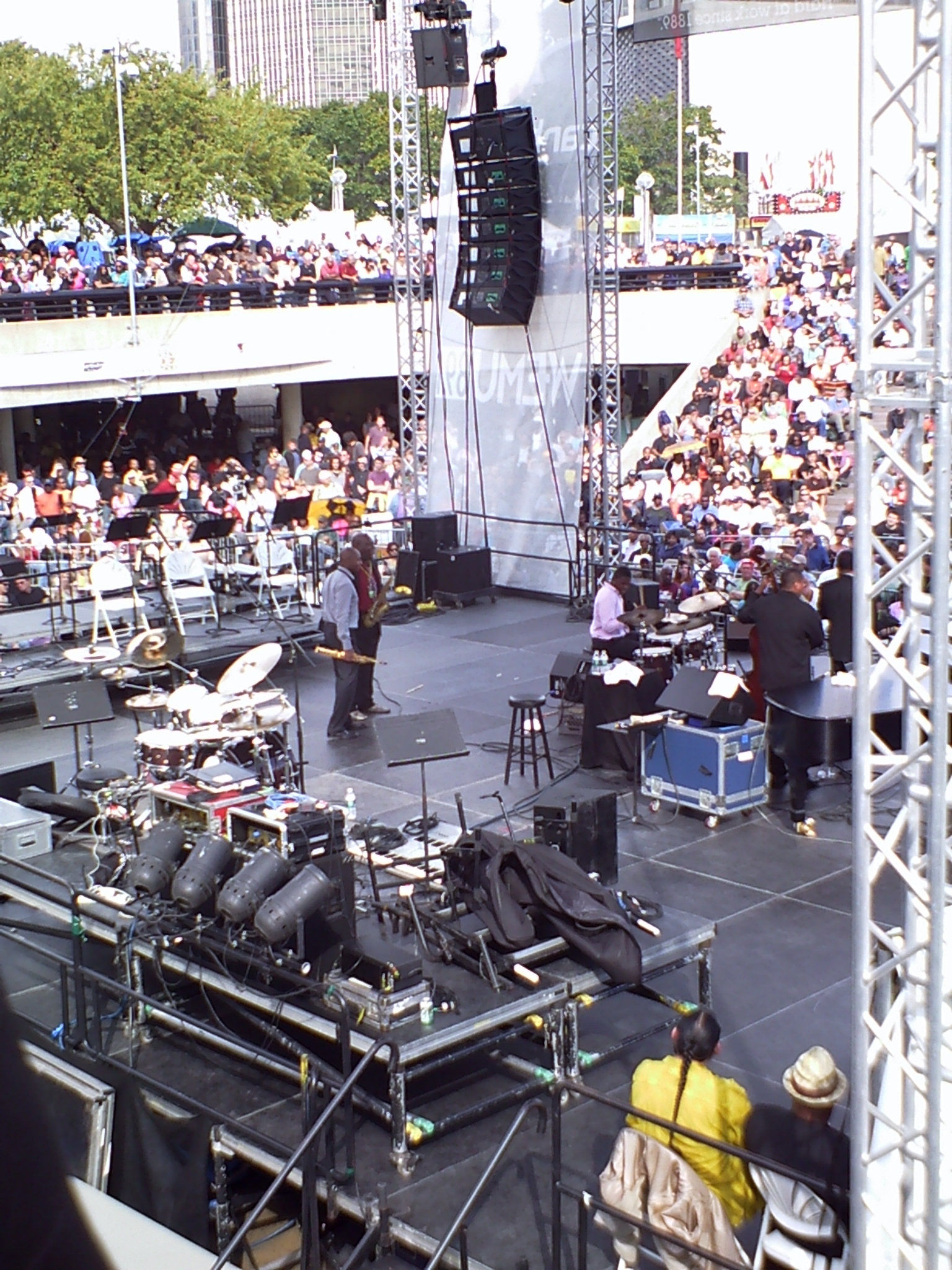
Fourth Street and Jazz Fest September 2009 001

Gerald Wilson and Orchestra at Detroit Jazz Fest 2009


I love the old music photography.  This is an assortment of photos and photographers available on the internet.  The photos here are my own.  I don’t consider myself a “real photographer” per se.  Yet I’ve shot at least 2 or 3000 photographs over the years, both around Detroit and in my travels.           

First, the late Roy DeCarava (1919-2009).  He just died recently.  I love his book of photos The Sound I Saw.  It gets into the atmosphere, the neighborhood in which jazz is played, not just photos of the musicians themselves.          

Obituary:           

http://www.latimes.com/entertainment/news/arts/la-me-roy-decarava29-2009oct29,0,860183.story           

http://www.npr.org/templates/story/story.php?storyId=114351046           

Photographs:           

http://listicles.thelmagazine.com/2009/10/25-haunting-roy-decarava-photos-of-harlem/           

Bucky Pizzarelli at the 2009 Detroit Jazz Festival


Jim Marshall is well-known for his music photography including rock and pop as well as jazz.  He started doing documentary work in the early 1960’s, including photos of poverty in the USA and the civil rights movement.   Here’s photos of John Coltrane, Miles Davis and Thelonious Monk.       

http://www.marshallphoto.com/collection/list/album/coltrane         

http://www.marshallphoto.com/collection/list/album/miles          

http://www.marshallphoto.com/collection/list/album/monk       

Milt Hinton (1910-2000) was an excellent jazz bass player as well as a photographer.  His friendship with his fellow player helped him to  get more relaxed and natural photos.       

Biography:           

http://www.milthinton.com/html/bio.html           

Photographs:           

http://www.milthinton.com/html/photo_b.html            

http://newarkwww.rutgers.edu/ijs/cb/miltHinton.htm      

William Claxton (1927-2008) is another photographer who has often shot photos of jazz musicians:      

http://www.williamclaxton.com/movie.html      

http://www.nytimes.com/2008/10/14/arts/design/14claxton.html      

Ole Brask (1935-2009):      

http://ole-brask.dk/en/post/2009/08/17/The-photographer-Ole-Brask-is-dead.aspx      

http://stomp-off.blogspot.com/2009/08/ole-brask-had-died.html      

Herman Leonard (b1923):      

He’s one of the great ones.  He lived in New Orleans and his studio and a lot of his work was destroyed in Hurricane Katrina in 2005.  Check out his bio on his website as well as the jazz photos.      

http://www.hermanleonard.com/      

http://www.hermanleonard.com/default_jazz.htm      

http://www.andrewsmithgallery.com/exhibitions/hermanleonard/hermanleonard.htm      

an interview with Herman Leonard: 

http://www.jerryjazzmusician.com/linernotes/hleonard.html    

Pannonica de Koenigswarter, the “jazz baroness” (1913-1988) is legendary for having befriended many jazz musicians including Thelonious Monk and Charlie Parker.  She also shot a lot of photographs and recently had a book of them published.  There’s also a new documentary film about her.    

http://www.nytimes.com/2008/10/19/arts/music/19sing.html?ref=arts    

http://www.thejazzbaroness.co.uk/archive.asp     

Various others!  Including Duncan Schiedt (b 1921):    

http://www.duncanschiedt.com/gallery.asp    

http://www.duncanschiedt.com/zoom.asp   

Lee Tanner:   

http://www.jazzimage.com/   

William Gottlieb (1917-2006):   

http://lcweb2.loc.gov/ammem/wghtml/   

http://www.jazzphotos.com/   

Bob Parent (1923-1987):   

http://www.jazzpix.com/   

http://www.allaboutjazz.com/php/gallery2/main.php?g2_itemId=20665   

others include Helen Mandel, Jeffrey Kliman, Skip Bolen and  Jimmy Katz.  Then there’s Bert Stern.  He’s not primarily know for his jazz photos but he did direct a classic jazz film Jazz on a Summer’s Day.   

http://en.wikipedia.org/wiki/Jazz_on_a_Summer’s_Day

Benny Golson (October 1998)

November 6, 2009

6a00e008dca1f088340120a605c1a6970c-200wi

I saw jazz great Benny Golson give a talk here in Detroit on October 22, 1998.   I believe it was at Detroit’s Orchestra Hall (formerly the Paradise Theatre).  Here are a few of my notes from that.  I just found them in one of my sketchbooks.  The quotes may not be totally precise, but close:

He called jazz “an imperial distraction of the highest magnitude.”  He also said that “in jazz, you may keep going back to the same forest, yet it’s not the same trees.”

He said that “improvisation changes everything.”  He went on to compare the sensation to a wheel within a wheel or a horizon line that keeps vanishing whenever you “get there.” 

http://www.bennygolson.com/

http://en.wikipedia.org/wiki/Benny_Golson